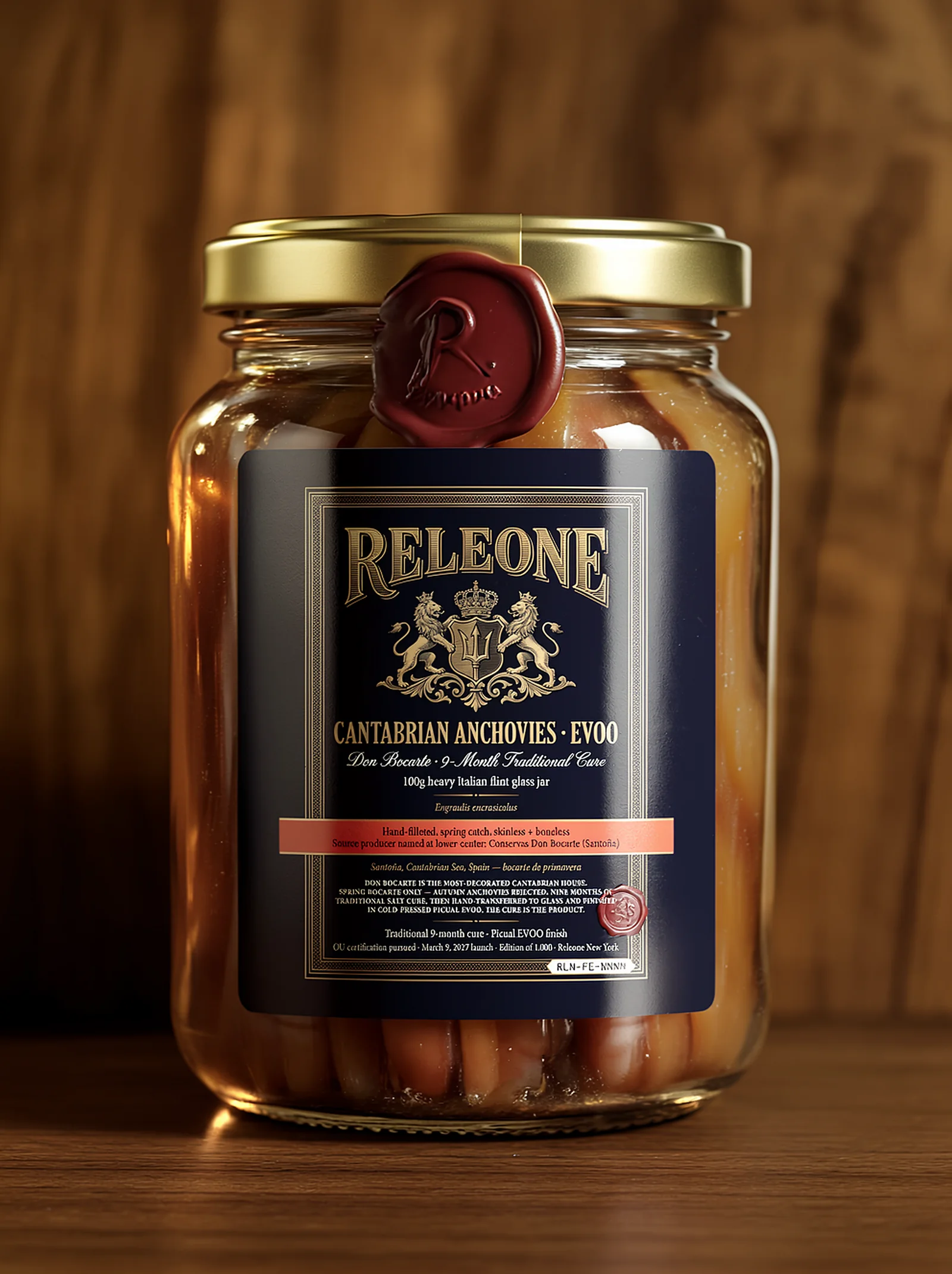
Engraulis encrasicolus from the Bay of Biscay, fished by a single Cantabrian vessel between April and June only — the brief window when the fish are fattest. EU Council 2025 raised the quota 8% for 2026 to 29,700 t, recovery in motion.
The cure
Hand-filleted in Santoña on the day of landing. Salt-cured nine months — not three, not six — in wooden barrels rotated weekly. The flesh becomes mahogany. The bones dissolve. Packed in cold-pressed Picual.
At the table
— A single anchovy on hot toast, no butter needed.
— Pan bagnat with Niçoise olives, tomato, hard egg, the anchovy laid across.
— Espelette pepper, anchovy fillet, a thin shaving of Manchego, dry sherry.
House standards
·Hand-filleted, never machine-filleted.
·Nine-month cure. The longest in the category.
·Skinless and boneless. OU certification pursued.
·Glass — you should see the cure colour develop.
Questions
Why glass and not tin?
Tin oxidises the cure. Glass lets the buyer judge what they're paying for. The boqueron-grey colour through nine months of salt is a fingerprint — if you can't see it, you can't trust it.
How salty are these?
Less than commodity Mediterranean anchovies. We desalt mid-cure and pack in oil, not in salt. The flavour is concentrated, not punishing.
Do I need to rinse them?
No. Open the jar, lift a fillet onto bread, finished.
Shelf life?
24 months sealed in the refrigerator. Once opened, transfer remaining fillets into a small glass with the jar's oil and finish within seven days.