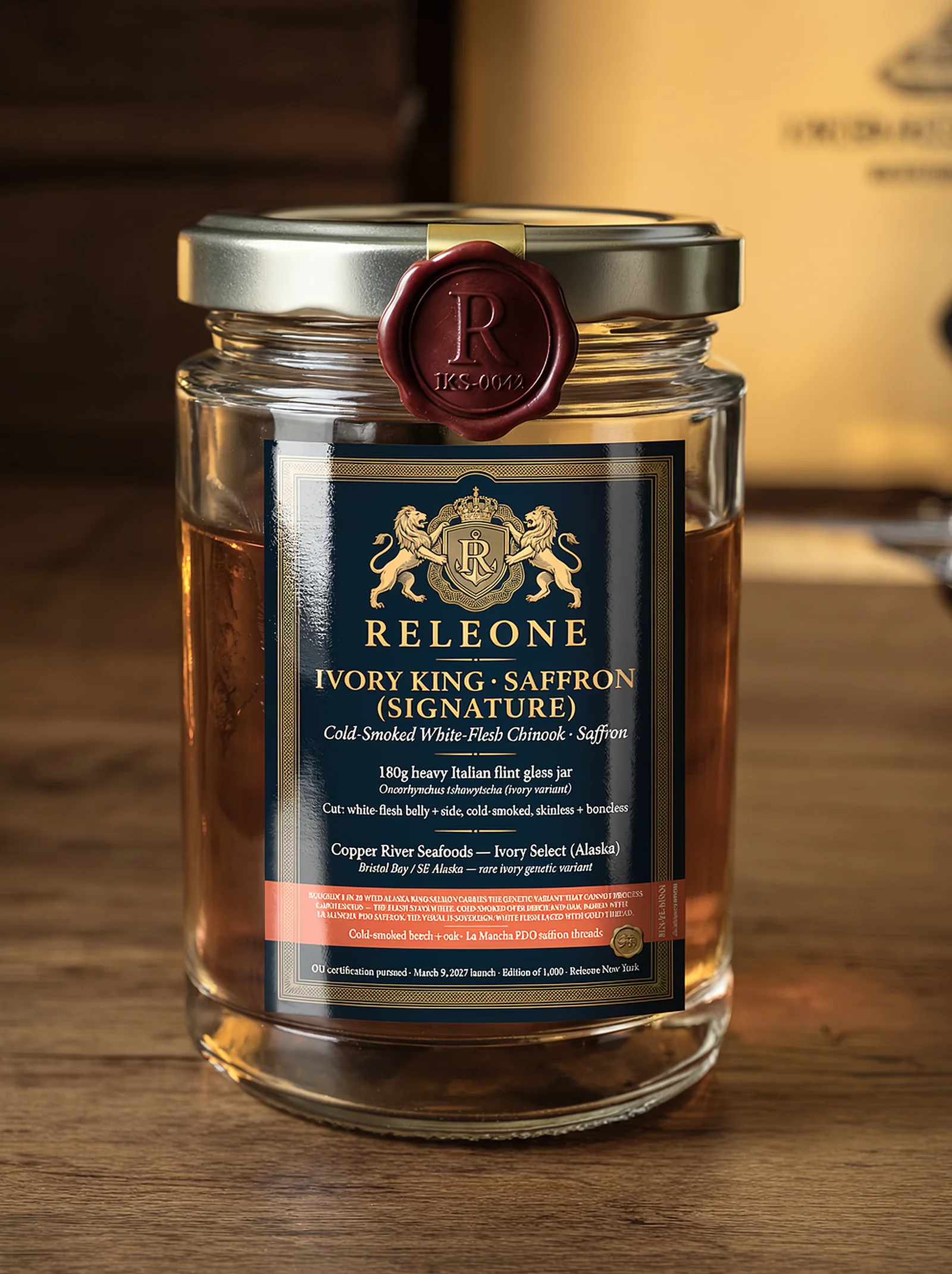
The richest of the five Pacific salmon species. Late-summer, line-caught, off the Yukon and Copper rivers — astaxanthin-rich, fat-marbled, opaque pink in the jar.
OriginYukon · Copper · Alaska
CatchLate-summer · line-caught
Format250g · glass
Reserve from$32
— Ivory King · Bristol Bay · line-caught
The fish
Eight reasons it's in our jar.
Not farmed. Not Atlantic. Not the bright-orange dye-fed fish on most shelves. Wild Pacific Chinook from late-season runs only — the version of salmon that earned the name King.
The richest of the five Pacific salmon species — highest natural fat content.
Omega-3 EPA + DHA: ~2.7g per 100g — among the highest in the salmon family.
Astaxanthin: the natural carotenoid that gives wild King salmon its deep colour.
Complete protein: 22g per 100g with full amino acid profile.
Vitamin D: ~80% of daily intake per serving — rare from food, abundant in wild salmon.
Selenium and B12 — selenium contributes to normal thyroid function; B12 to normal nervous-system function (EU-authorised claims).
Line-caught off the Yukon and Copper rivers, late-summer harvest only.
Slow-cured in EVOO — texture stays opaque, fat stays intact, color stays pink.
Specifications
Species
Oncorhynchus tshawytscha (Chinook)
Cut
Belly + dorsal portions
Origin
Yukon & Copper rivers · Alaska
Method
Slow-cured in EVOO, glass-jarred
Format
250g hermetic glass
Kosher
OU certification pursued
Shelf life
24 months sealed · 7 days opened
Pairs with
Capers, dill, crème fraîche, rye
Configure
Choose your cure.
One fish, four expressions. Same Wild King, dressed for the table you intend.
Chinook salmon (Oncorhynchus tshawytscha) from the Late-Summer Yukon River run — line-caught by Alaska Native fishermen operating under the U.S. Department of the Interior subsistence framework. Single-vessel sourcing, photographed boat, tagged for the certificate.
The cure
Filleted on the boat, skinless and boneless before vacuum brine, slow-cured in cold-pressed Picual extra-virgin olive oil. The colour you see is the natural carotenoid from the salmon's diet — astaxanthin, not dye. The Bristol Bay late run is the fattest king salmon America produces.
At the table
— Brown bread, cultured Normandy butter, a few capers, the jar opened cold.
— Pasta cotta in salmon-oil emulsion, finished with the flake at the table.
— Yamasaki rye whisky on the rocks; the salmon eaten between sips.
House standards
·Skinless and boneless before packing — no spine, no pin bones.
·OU certification pursued.
·Wild caught, never farmed, never colour-corrected.
·Glass jar. Signed forever on Algorand.
Questions
Why Yukon and not Copper River?
Yukon kings are the fattest of all chinook because they swim 2,000 miles upriver — they must carry their fuel. Copper River fish are excellent but average a third less fat. We chose for the cure.
Is the colour natural?
Yes. The pink-orange is astaxanthin, the same pigment that gives flamingos their colour. Wild Alaskan salmon eat krill and shrimp; the pigment accumulates in the muscle. Farmed salmon are fed synthetic astaxanthin to mimic this colour.
Is this lox?
No. Lox is brine-cured; this is oil-cured. The texture is softer, the salt is gentler, the oil is the carrier.
What about mercury?
King salmon are not apex predators — they eat krill and small forage fish. Mercury levels are at the low end of the FDA "Best Choices" advisory. Test reports are in the certificate.