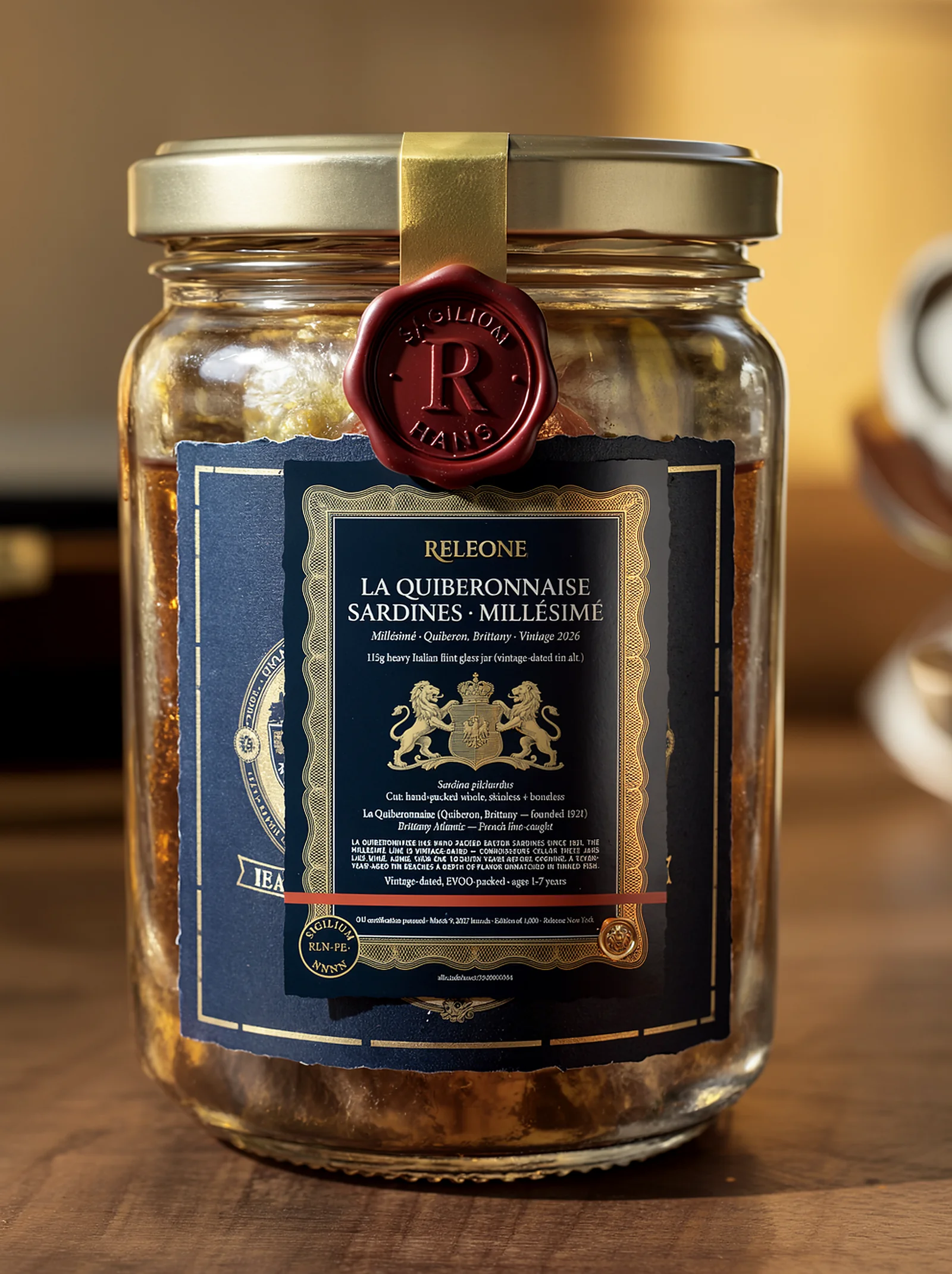
Sardina pilchardus from the Algarve coast, small-boat purse-seine, by a Portuguese cooperative operating on a quota cap and a closed-season discipline. Spring catch only — when the fish are oilier and the meat sweeter.
The cure
Headed, gutted, skinned and de-boned within four hours of landing. Light salt-cure overnight, oil-pack the next morning in cold-pressed Picual EVOO. Sealed in glass within 24 hours of the boat returning to port.
At the table
— Sardine on rye, mustard, raw onion, beer.
— Pasta with the sardine flake, lemon zest, garlic, a finishing splash of the jar oil.
— Vinho Verde, sardine on toast, the table outside in summer.
House standards
·Skinless and boneless — every fillet, before the jar closes.
Skin makes for visual drama but for a glass-jar product where the eater is the photographer, we strip it. Cleaner bite, gentler oxidation profile.
Sustainable?
Yes. Sardine stocks in the Algarve are tightly managed by ICES with annual quotas and seasonal closures. The cooperative we buy from carries MSC certification.
Is this the same as canned sardines?
No. Commodity canned sardines are typically frozen, machine-processed, and tin-packed at 35-50 cents in scale. Ours are fresh-cured at port, hand-finished, glass-sealed. Different category.
Health profile?
Sardines are among the highest-omega-3 fish per gram. Low mercury, calcium-rich (from any soft bones that remain in the curing oil), vitamin D dense.